Why Are Russia and Ukraine at War? The Roots of the Russia-Ukraine War Explained
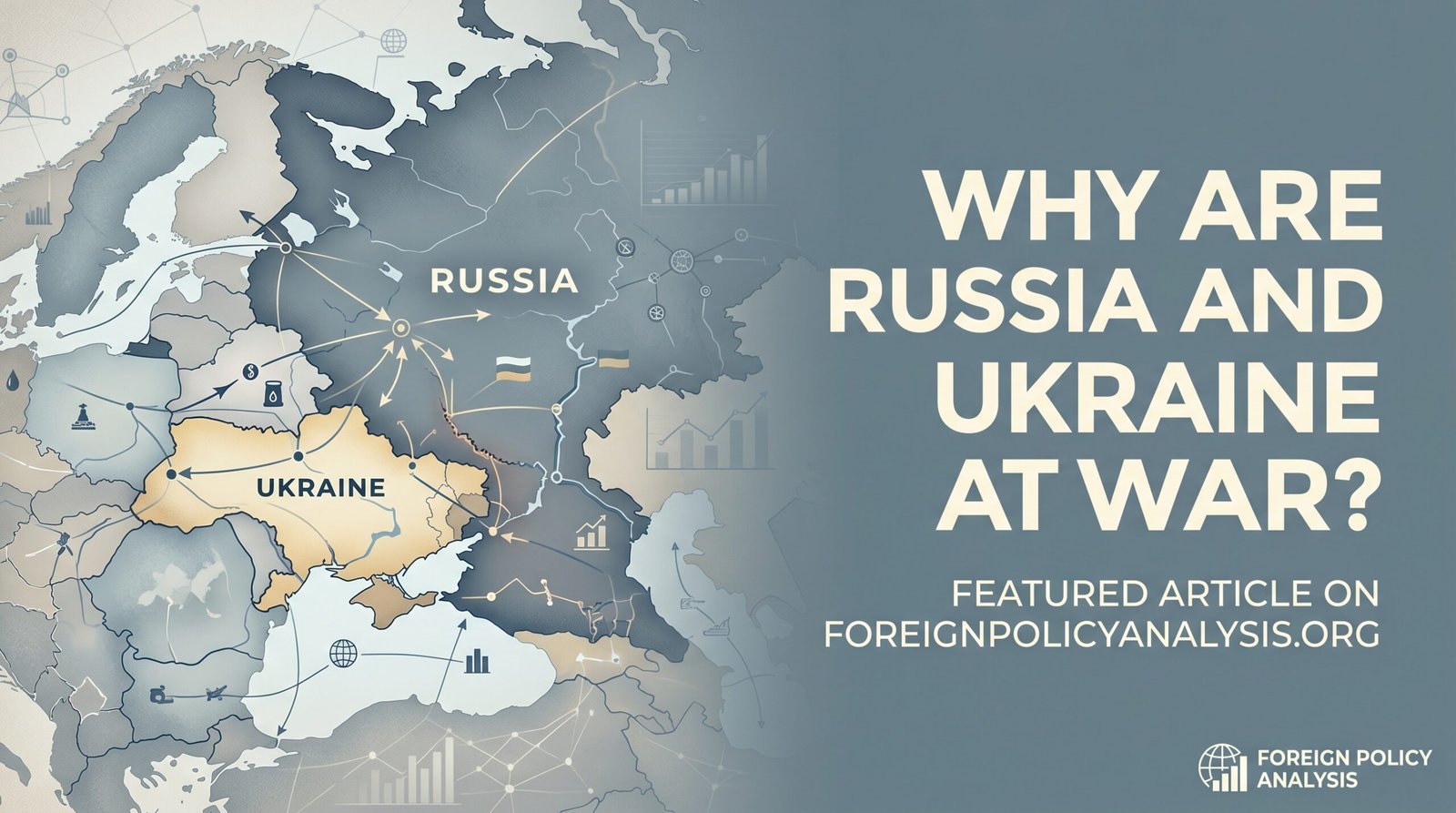
If you have ever tried to figure out why Russia and Ukraine are at war and walked away more confused than when you started, you are not alone. The story gets told as either a simple morality tale or a tangle of history no one can follow. The truth sits in between. This piece walks you through the real causes, from the collapse of the Soviet Union to the 2014 annexation of Crimea to the full-scale invasion of Ukraine in 2022. We keep it factual, we keep it neutral, and we explain what each side actually claims rather than telling you who to root for. By the end you will understand the war well enough to spot when someone is oversimplifying it.
Why Are Russia and Ukraine at War in the First Place?
The short answer: Russia invaded Ukraine, and the deeper you dig, the more the reasons stack on top of each other. Russian President Vladimir Putin frames it as a security and identity issue. He has argued that NATO expansion threatens Russia and has described Russians and Ukrainians as “one people” with a shared history that, in his telling, makes Ukraine less than a fully separate nation. Ukraine and most of the international community see it differently. They view the war as a straightforward act of aggression against a sovereign state.
Both framings point at real facts, which is why the debate never fully settles. NATO did expand eastward after the Cold War. Ukraine did move closer to Europe. Russia did feel its influence in Ukraine slipping. None of that legally justifies an invasion, but understanding Moscow’s stated reasoning matters if you want to understand why the war happened and why it has been so hard to stop. The conflict that began in 2014 and exploded in 2022 grew out of a long argument over which direction Ukraine would face.
How Did the Collapse of the Soviet Union Set This Up?
Ukraine was part of the Soviet Union until it collapsed in 1991. When the former Soviet structure broke apart, Ukraine became an independent country, and a lot of Russian leaders never fully accepted that as permanent. Putin once called the dissolution of the Soviet Union a major catastrophe. That sentiment is the emotional engine behind a lot of what followed.
There is also a geographic wrinkle that keeps coming up. Crimea, the peninsula on the Black Sea, was transferred from Russia to Ukraine in 1954 when Soviet leader Nikita Khrushchev moved it between republics that were all part of the same country at the time. Nobody thought much of it then. After 1991 it meant Crimea, home to Russia’s Black Sea Fleet and the strategic port city of Sevastopol, sat inside an independent Ukraine. That detail becomes very important in 2014.
What Happened in Ukraine in February 2014?
This is the hinge point. In late 2013, Ukraine’s pro-Russian President Viktor Yanukovych backed out of a deal for closer ties with the European Union, reportedly under pressure from Moscow. Ukrainians who wanted a European future poured into the streets of Kyiv in protests that became known as the Revolution of Dignity. The crackdown turned deadly, and in February 2014 Yanukovych fled the country.
Russia responded fast. Within days, soldiers without insignia, later admitted by Putin to be Russian special forces, began occupying Crimea. By early March, Russian troops controlled the peninsula. A disputed referendum followed, and in March 2014 Russia annexed Crimea, the first forcible seizure of European territory by another state since World War II. Most of the world refused to recognize it. The G8 suspended Russia, and Western governments imposed the first round of sanctions on Russia.
Why Did Russia Annex Crimea Specifically?
Crimea was the prize that made the most strategic sense to grab. It hosts Russia’s Black Sea Fleet, which gives Moscow naval reach into the Mediterranean and beyond. Losing that base to a Ukraine drifting toward NATO was a nightmare scenario for Russian military strategy. So when Yanukovych fell, Putin moved to lock in the one piece of Ukrainian territory Russia could not afford to lose.
There were other motives layered in. Crimea has offshore oil and gas in the Black Sea. Its population included a large share of ethnic Russians and Russian speakers, which gave Moscow a useful narrative about protecting its own. Putin has insisted the annexation was a response to events rather than a long-held plan. Whatever the mix of opportunism and strategy, the result was the same. Russia annexed Crimea, and the Russia-Ukraine war was underway, even if most people did not call it that yet.
What Was the Donbas War Before the Full-Scale Invasion?
Right after Crimea, fighting broke out in eastern Ukraine. In the Donbas region, made up of the Donetsk and Luhansk areas, pro-Russian separatists backed by Russian troops and equipment seized towns and cities. Russia denied direct involvement, but Ukraine and NATO documented Russian forces and cross-border shelling. The Ukrainian military fought back, and the front line hardened into a grinding stalemate.
This phase lasted eight years and killed thousands while displacing many more. Large numbers of people became internally displaced inside Ukraine. The war never truly stopped between 2014 and 2022; it simmered. So when people ask when the russia-ukraine war started, the honest answer is February 2014, not 2022. The full-scale invasion was an escalation of a conflict that had already been running for years in eastern Ukraine.
Why Did Russia Launch the Full-Scale Invasion of Ukraine in 2022?
In late 2021, Russia began massing russian troops along Ukraine’s borders under the cover of military exercises. Moscow demanded a guarantee that Ukraine would never join NATO. NATO’s position was that Ukraine and the alliance’s members get to make that call, not Russia. The standoff escalated through the winter.
On February 24, 2022, Russia launched its full-scale invasion of Ukraine, calling it a “special military operation.” Putin’s stated reasons included stopping NATO expansion, “denazifying” Ukraine, and protecting Russian speakers, claims that ranged from contested to false. The Ukrainian military, written off by many analysts, held Kyiv and pushed Russian forces back from the capital. What Moscow apparently expected to be a quick operation became the biggest war in Europe since 1945.
Is the War Really About NATO?
This is the most argued-over question in the whole debate, so let us be precise. Russia says NATO is the core issue. Putin has claimed for years that the alliance moving toward Russia’s borders is an existential threat, and he pointed to it directly when justifying the invasion of Ukraine in February 2022.
The counterargument is just as grounded. Ukraine was officially neutral when Russia annexed Crimea in 2014, and Ukrainian public support for joining NATO was actually low before 2014. It was Russia’s own aggression that flipped Ukrainian opinion strongly toward the alliance. Some analysts add that Russia’s occupation of Crimea and the Donbas had already effectively blocked Ukraine’s NATO path, which suggests NATO was more a justification than the true driver. The honest read is that NATO is one real factor among several, including Putin’s view of Ukrainian identity, Russian interests in the region, and a desire to keep Ukraine inside Russia’s sphere of influence.
Where Does Donald Trump Fit Into the Russia-Ukraine War?
Donald Trump has pushed to broker an end to the war, and his approach has reshaped the diplomatic picture. His administration put forward a draft peace framework involving territorial questions and security guarantees, and held a high-profile summit with Putin. Ukraine has engaged with parts of the proposal, though key terms around concessions and guarantees remain unsettled, and Russia has signaled it will not accept versions that stray from what its leaders believe was agreed.
The wider world keeps intruding on these talks. A separate Iran War flashpoint pulled Washington’s attention toward the Middle East for stretches, and shifting ceasefire dynamics there have affected how much focus lands on Ukraine at any given moment. For readers tracking the latest news, the takeaway is that diplomacy is active but fragile, and outside crises can speed it up or stall it without warning.
What Are the Consequences of the War So Far?
The human cost is staggering. Hundreds of thousands of soldiers on both sides have been killed or wounded, and the United Nations has documented many thousands of Ukrainian civilian deaths. Millions of Ukrainians have fled abroad or been displaced inside their own country. Cities have been flattened, and Ukraine’s energy grid has taken repeated, deliberate damage.
The ripple effects reach far past the two countries. Western governments have layered heavy sanctions on Russia, while Moscow has deepened ties with countries willing to buy its oil and supply military gear. Ukraine has received tens of billions in military aid and broader aid to Ukraine from Western backers. The war reset European security thinking, pushed NATO to reinforce its eastern flank, and turned Eastern Europe into the center of a geopolitical contest that will outlast whenever the fighting stops.
The Short Version You Can Actually Remember
Strip away the noise and the war comes down to a few connected facts. Ukraine left Russia’s orbit, Russia tried to drag it back by force, and a regional dispute became a continental crisis. Here are the key points to hold onto:
- The war started in 2014, not 2022. Russia annexed Crimea in March 2014 after pro-Russian President Viktor Yanukovych fled, then backed separatists in the Donbas.
- The full-scale invasion of Ukraine began on February 24, 2022, escalating an eight-year conflict into the largest war in Europe since World War II.
- Crimea mattered because of Russia’s Black Sea Fleet at Sevastopol, plus energy resources and a large Russian-speaking population.
- Putin frames the war around NATO expansion and a claim that Russians and Ukrainians are “one people.” Ukraine and most of the world call it aggression against a sovereign state.
- NATO is a real factor but a contested one, since Ukraine was neutral in 2014 and Russian aggression is what shifted Ukrainian opinion toward the alliance.
- Donald Trump has pushed peace talks, but key terms remain unresolved and the process stays fragile.
- The consequences include massive casualties, millions displaced, broad sanctions on Russia, and a permanently changed security order in Eastern Europe.