What Does “Foreign Relations” Actually Mean?
Understanding foreign relations reveals the intricate web of global interactions that shape our world, but what really drives these complex relationships?
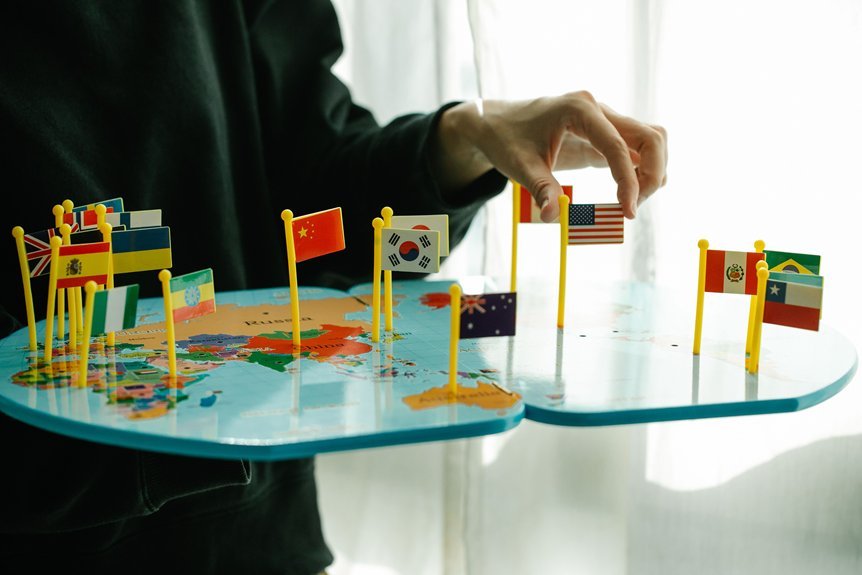
Foreign relations involve complex interactions between nations. These relationships shape global dynamics in diplomacy, trade, and cultural exchange. They influence international peace and economic stability. As countries pursue their interests, they encounter numerous challenges and opportunities. Understanding the core components of foreign relations helps grasp the intricacies of our interconnected world. What factors drive these relationships, and how do they evolve over time?
Understanding the Core Components of Foreign Relations
Understanding the core components of foreign relations involves dissecting the intricate web of diplomacy, trade, and international law.
Diplomacy serves as the primary means for countries to communicate, negotiate, and resolve conflicts.
Trade fosters economic interdependence. It allows nations to benefit from each other’s resources and markets.
International law establishes the rules and norms governing state behavior. It ensures a degree of predictability and stability in relations.
How Countries Establish Diplomatic Ties?
Countries begin by recognizing each other’s sovereignty. This acknowledgment lays the groundwork for dialogue and cooperation.
They often exchange ambassadors to create formal channels for communication. Treaties and agreements are negotiated to address mutual interests, ensuring both parties understand their commitments.
Cultural exchanges and joint initiatives strengthen these ties and foster goodwill. Countries may also participate in international organizations together, enhancing their collaborative efforts on global issues.
Establishing diplomatic ties builds trust and finds common ground.
The Role of Trade in Foreign Relations
Trade plays a pivotal role in shaping foreign relations among nations. It serves as a bridge, fostering connections and mutual interests.
Countries engaging in trade create interdependencies. These interdependencies can enhance cooperation and reduce tensions. Strong trade partnerships often lead to diplomatic discussions. Such discussions help resolve conflicts and encourage collaboration on global issues.
Trade agreements signal trust and commitment between nations. They promote stability in international relations.
Countries relying on each other for goods and services are less likely to engage in hostilities. By prioritizing trade, nations can boost their economies and cultivate lasting relationships.
How Military Alliances Influence Global Dynamics
Military alliances significantly shape global dynamics. They often act as counterweights to trade relationships. These partnerships forge collective security, enabling countries to deter threats and project power.
When nations unite under alliances like NATO or ASEAN, they enhance military capabilities and influence political stability. These alliances can shift global attention and impact diplomatic negotiations and economic strategies.
Countries frequently align their policies based on alliance commitments. This alignment can lead to a more predictable international landscape. However, these relationships can also provoke tensions, as rival states respond to perceived threats.
Understanding military alliances helps grasp the intricate balance of power that underpins global interactions.
The Importance of Cultural Exchange in Foreign Relations
Cultural exchange plays a significant role in fostering mutual understanding and cooperation between nations. Engaging in cultural activities, like art exhibitions, student exchanges, and culinary festivals, allows people to connect personally. Such interactions break down stereotypes and build empathy. They create a foundation for stronger diplomatic ties.
Immersing yourself in another culture provides insights that inform your perspective. This enhances collaborative efforts. Cultural diplomacy can soften tensions during conflicts. It promotes dialogue over discord.
Embracing cultural exchange enriches both individuals and nations. Shared experiences can lead to shared solutions in the complex landscape of international relations.
Positive and Negative Impacts of International Treaties
International treaties can significantly shape global relations, both positively and negatively. On the positive side, treaties foster cooperation, promote peace, and establish frameworks for trade and environmental protection. They help nations align on common goals, enhancing stability and mutual understanding.
However, the negative impacts can’t be overlooked. Treaties may impose restrictions that limit national sovereignty or lead to unequal power dynamics. Stronger nations can dominate weaker ones.
When agreements fail to consider local contexts, they can exacerbate tensions or create unintended consequences. The effectiveness of international treaties hinges on their design and implementation, requiring careful negotiation to balance benefits against potential drawbacks.
Humanitarian Efforts in Foreign Relations
Humanitarian efforts shape foreign relations, especially when treaties and agreements fail to address urgent human needs. When governments and organizations prioritize humanitarian aid, they foster goodwill and collaboration among nations.
This approach can lead to stronger diplomatic ties and a shared responsibility for global challenges. By addressing issues like famine, natural disasters, and health crises, you alleviate suffering and demonstrate a commitment to universal values.
Engaging in humanitarian efforts can enhance a country’s reputation, allowing it to be seen as a leader in promoting human rights and dignity. These actions reflect a deeper understanding of interconnectedness and foster a sense of belonging in an increasingly globalized world.
Challenges Faced in Foreign Relations
Nations encounter a myriad of challenges that complicate foreign relations. Conflicting interests can lead to diplomatic tensions. Countries often prioritize their own agendas over collaboration.
Economic disparities create friction. Wealthier nations sometimes impose policies that disadvantage developing ones.
Cultural misunderstandings hinder effective communication and foster mistrust. Security concerns, especially terrorism and military conflicts, complicate relationships further.
Domestic pressures also influence international stances, making it hard to maintain consistent foreign policy.
Public Opinion and Its Impact on Foreign Policy?
Conflicting interests and economic disparities shape foreign relations. Public opinion also plays a significant role in how nations formulate their policies. Citizens express their views, and governments feel compelled to respond.
Widespread support for humanitarian aid can push a nation to act decisively in crisis situations. Public opposition to military interventions can lead to a reevaluation of foreign strategies.
Social media amplifies these sentiments, allowing opinions to spread rapidly and impact political discourse. Leaders must balance their agendas with the expectations of the electorate.
Public sentiment can be both a guiding force and a constraint in crafting effective foreign policy. Understanding this dynamic is important for fostering informed citizen engagement.
The Future of Foreign Relations in a Globalized World
The future of foreign relations will hinge on the ability of nations to manage complex interdependencies. Global challenges like climate change and cybersecurity require collaborative approaches.
Countries must prioritize diplomacy over unilateral actions and foster alliances that reflect shared values and mutual interests. As economies intertwine, trade agreements and economic policies will shape international dynamics.
Public opinion and grassroots movements will influence foreign policy more than ever. Governments will need to respond to citizen concerns.
The effectiveness of foreign relations will depend on a nation’s commitment to cooperation, empathy, and understanding in a rapidly evolving global landscape.