Trump Wanted the Iran War. Now He Wants an Exit.
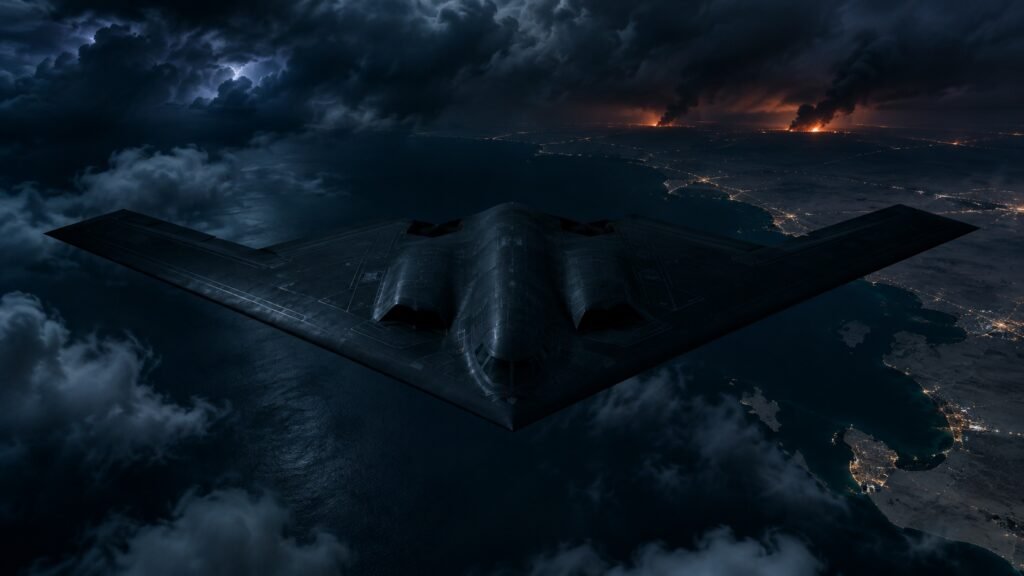
Brief: President Donald Trump owns the Iran war from the June 2025 B-2 strikes forward, and the November 2026 midterm elections delivered a bipartisan rebuke of how the campaign has played out. Secretary of State Marco Rubio now says Trump wants to resolve the Iranian war peacefully, even as Israeli Prime Minister Benjamin Netanyahu presses for a second wave of strikes. Any deal that lets Trump declare victory will have to reconcile a war he chose with an outcome he no longer appears to want.
A war that began with Operation Midnight Hammer in June 2025, continued through Operation Epic Fury in February 2026, and extended into limited strikes on Qeshm Island on the eve of the November 2026 midterm elections has produced an awkward political fact for the second Trump administration. The war Donald Trump wanted is now the war he says he wants to end. What changed is not the nuclear program in Tehran. What changed is the price of oil, the midterm map, and the patience of a public that was told the Islamic Republic would fold.
The War Trump Chose
Trump’s rationale for the strikes on Iran has shifted repeatedly. In June 2025, he said U.S. forces “completely and totally obliterated” the Iranian enrichment facilities at Fordow, Natanz, and Isfahan. By February 2026, he contradicted that claim by arguing Iran was rebuilding its nuclear program, and launched a wider war on that basis. Each successive wave of strikes has produced a smaller deterrent effect and a larger domestic cost.
The intelligence record undercuts the urgency Trump cited. In March 2025, the U.S. intelligence community formally assessed that Iran was not building a nuclear weapon and that the Supreme Leader, Ali Khamenei, had not reauthorized the weapons program he suspended in 2003. Trump rejected that assessment before ordering the June strikes. He has repeated the rejection since. Whether Trump wanted an Iran war in 2025 is not seriously in dispute. The question is why, and the answer runs through a decision he made seven years earlier.
How Tehran Reached Breakout in the First Place
The 2015 Joint Comprehensive Plan of Action capped Iranian enrichment at 3.67 percent, cut its uranium stockpile by 98 percent, and extended its breakout time from roughly two months to twelve. The International Atomic Energy Agency verified compliance every quarter. Trump withdrew from the agreement in May 2018 anyway, citing sunset clauses and Iran’s ballistic missile program, neither of which the JCPOA had ever claimed to resolve. Iran continued to comply for fourteen months before beginning its own breaches in July 2019.
The breakout numbers tell the rest. By 2021, Iran was enriching to 60 percent. By 2023, the window had collapsed to roughly twelve days. By the time Trump returned to office in January 2025, the Islamic Republic of Iran sat closer to a weapon than at any point since the Khatami era. The war Trump launched in June 2025 was framed as a response to that proximity. It was also, substantially, a response to a crisis his first administration had helped create.
The Midterm Verdict
Americans voted on November 3. Trump has since acknowledged publicly that the Iran war contributed to Republican losses. The New York Times reported that he continued to invoke Iran throughout the midterm campaign despite internal polling showing the issue was costing him. Gas prices, war costs reported at $47 billion, and a steady drumbeat of tanker strikes in and around the Strait of Hormuz left the administration defending a conflict with no visible off-ramp.
The electoral math has policy consequences. Analysts cited in the New York Post note that Trump has a narrow window of a few weeks after the midterm elections to launch a renewed war on Iran before a new Congress is likely to rein in his war powers. That window closes in January. Both chambers are expected to move on war powers resolutions. The administration understands this. Rubio’s late-October framing, that Trump would like to resolve the Iranian war diplomatically and would prefer not to use military force, is a signal to Tehran and to Capitol Hill at the same time.
Netanyahu’s Pressure, Vance’s Letter
Working against that signal is the Israeli prime minister. Netanyahu is pressing Trump to attack Iran after the midterms, according to multiple officials cited by CBS. The Israeli strategic logic is straightforward. A rebuilt Iranian program means a rebuilt Israeli problem, and the window for degrading it before it hardens again is closing. The Israel Defense Forces view the June and February campaigns as incomplete.
Vice President JD Vance sent a letter to Iranian counterparts during the Doha talks, according to reporting from the Jerusalem Post, framing the current window as the moment for an interim deal. Vance told reporters there had been a number of good conversations with the Iranians after officials from the Islamic regime met with Qatari mediators. Iranian Foreign Minister Abbas Araghchi has called the U.S. response to the latest proposal not convincing. Mojtaba Khamenei, increasingly prominent as his father’s likely successor, has publicly ruled out concessions on enrichment as a sovereignty question. Former IRGC commander Mohsen Rezaee has echoed that line in Tehran media.
What a Settlement Actually Requires
Any deal Trump could sign and sell at home would need four things. Iran would have to accept an enrichment ceiling well below the 60 percent it has reached. Tehran would have to readmit IAEA inspectors with meaningful access. Washington would have to lift the maximum pressure sanctions reimposed since 2018. And someone would have to find language that lets Trump claim victory without requiring Iran to call it a defeat.
None of the four is impossible. All four together are hard. Qatari mediators have floated a two-day implementation period on a limited reopening of the Strait of Hormuz, which Iran has signaled it could meet. The harder negotiation is whether Trump will sign an interim deal that leaves Iran with any enrichment capacity at all, given that his own stated reason for the war was preventing exactly that. The Islamic Revolutionary Guard Corps has made its position plain in state media: the IRGC will determine the time and conditions for ending what it calls the enemy’s attacks.
The Blame Question
The Atlantic has reported that Trump is searching for a fall guy on Iran, questioning allies about the performances of Defense Secretary Pete Hegseth and General Dan Caine. That is a familiar pattern. The war that was supposed to end before the midterms did not. The nuclear program that was supposed to be obliterated was not. The regime that was supposed to fold under pressure has not. Someone will carry the political weight for those misses, and the president is already surveying candidates.
The deeper issue is structural. Trump wanted a short, demonstrative war that would force Iran to capitulate on terms he could present as a triumph over the Obama-era agreement. He got a long, unresolved war that has shortened his political runway, inflamed oil markets, and produced the very outcome he campaigned against: an Iranian regime closer to a weapon, and a Washington further from a settlement.
Key Takeaways
- Trump launched the current war with the June 2025 strikes on Fordow, Natanz, and Isfahan, expanded it with Operation Epic Fury in February 2026, and ordered limited strikes on Qeshm Island on the eve of the midterms.
- U.S. intelligence formally assessed in March 2025 that Iran was not building a nuclear weapon. Trump rejected that assessment before ordering the June strikes.
- Iran’s breakout time collapsed from roughly twelve months in 2018 to under two weeks by 2023. Most of that acceleration followed Trump’s May 2018 withdrawal from the JCPOA.
- The midterm elections cost Republicans their congressional majority. Trump has publicly acknowledged the Iran war was a factor.
- Rubio says Trump wants to end the Iran war peacefully. Netanyahu is pressing Trump to resume strikes. Vance has sent a letter to Iranian counterparts framing an interim deal.
- A settlement requires concessions on enrichment, inspections, and sanctions, plus language that allows both sides to claim they did not lose.
- A new Congress seated in January is expected to pursue war powers resolutions that would constrain further unilateral military action.